Wednesday, March 9

A short story


My wife is a writer and I have managed to persuade her to allow me to publish one of her short stories, about our adventure holiday.

Its Entitled Odyssey

It’s midday in late July and I’m huddled in a large fishing dinghy on the Pacific Ocean. The equatorial sun attempts to penetrate the swaddling of this mummy-like figure clinging to the wooden rim of the boat. What am I doing here, I wonder, as I drink greedily from my water bottle? I could be lounging lazily in Melbourne beside a cosy fire, sipping hot chocolate.

My friend, Barbara, sitting up on the side of this craft, soaking up the experience, knows why she is here. My husband, Lindsay, perched further forward on the opposite side, unconcerned about the sun’s perforating rays, knows what he is doing here. They are responding to an invitation to visit Abaiang, a small coral island, part of Kiribati (KIR-UH-BAHS) (formerly the Gilbert Islands).

“Come and visit my island; you will see the most amazing sunsets,” Judy, a 27 year old Canadian missionary, offered to Barbara some months earlier.

Barbara has come because she has visited Kiribati before, and feels the need to return, perhaps to commit to some volunteer work later. Lindsay wished to accompany a friend, to experience something new, and I am, somewhat reluctantly, accompanying partner and friend.

“Look, dolphins,” calls Lindsay over the whirr of the outboard motor.

I struggle to make myself a little more comfortable on my luggage seat, at the same time following Lindsay’s gaze. Two grey forms leap gracefully from the cobalt sea ahead then disappear, like children playing hide and seek, into the inky depths. I’m mesmerised, waiting enthusiastically for their next display.

The ocean is relatively calm, dispelling my fear of huge swells, sea sickness, and most of all, the possibility of capsizing. I did read in Arthur Grimble’s, “A Pattern of Islands,” that the south-east trades breathe steadily at 25 miles an hour for months on end, but can slam round to the north and blow a 40 mile gale. I wonder if our two boatmen are expecting heavy weather? They’re wearing hard hats for some reason, and we can’t ask them why as their English is limited. We can but speculate! Perhaps there are large flying fish in the waters. Maybe they were a gift, or left over from a building site job some time. The latter seems unlikely, though, as there was little evidence of large building works at Basio, the port of Tarawa, from where we had cast off only an hour ago. There were, however, remains of industrious activity from the Second World War. The Japanese invaded Tarawa, building a landing strip, road and later cement bunkers to defend the island from the American rescuers. The beach, where once one of the largest and bloodiest battles of the Pacific was fought, is now covered with cramped village housing and the bunkers have become the children’s climbing equipment. Oh, there is really nothing to worry about, as we are still in sight of land: Tarawa, a slate silhouette on the horizon behind us, and Abaiang appearing ahead like a mirage, through the sun’s metallic rays.
I hope my water lasts. Of course it will. Only an hour to go and the temperature is unlikely to change much. The internet printout states that the temperature here varies little between 26 and 32 degrees Celsius all year round and I’m sure it’s reached the maximum. Wouldn’t it be pleasant if we could slip over the side to cool off. On second thought I don’t think I would like to risk the wrath of the tiger sharks (Tababa) said to hunt for trevally in these waters. Legend has it that if you stay still in the sea the Tababa will charge you. If you swim away from them in fear they will smell your fear and chase you. If you swim without fear towards them they will be afraid and leave you in peace. Still, this is not the time or place to prove myth or fact.

“Coming, ready or not.”

Where are those cheeky dolphins? I want to take a photo. Oh, good, there they are, so sleek and graceful. I wonder if they are marine guardian angels guiding us from island to island. That is a comforting thought. Is the sun addling my brain?

“What an amazing sight,” Barbara comments, wrenching me from my reverie.
“Yes, that is incredible. It looks like a house boat.”
“ Fam-ly fish,” responds one of our smiling boatmen.
The family doesn’t appear to be doing much fishing at the moment. I wouldn’t mind changing places with them. They seem very comfortable sitting cross-legged on that flat wooden roof beneath the shade of a tarpaulin, which, like a misplaced sail is tied loosely between the side of the vessel and two poles fastened to the deck. I imagine they are enjoying the gentle breeze generated by the propulsion of the craft through the sultry salty air.

Still, like us, they have little room to move around. Two thirds of the roof is covered with rolls of hand woven pandanus leaf mats which the native women weave to sell in the Tarawa market places. All their worldly possessions are stacked haphazardly on the lower deck. I wonder if those splashed of colour filtering through the open sided structure are sarongs drying in the heat.

Heat! Was it only two days ago I stepped from the plane to a burst of hot air which momentarily stopped me in my tracks? I should have expected it, as we are, after all, two degrees above the equator. The stifling, corrugated iron airport building was a far cry from the modern Tullamarine air terminal. Our luggage had been piled in the far corner, on a cement floor, among dozens of those striped plastic carry-all bags which the I-Kirabiti passengers used as luggage. Various packages and boxes full of purchases from Australia littered the unloading bay entrance, slowing our customs clearance. It was 10:00am and 28 degrees in the shade, and I was anxious for a cold shower and a change of clothes.

A pale hand beckoned like a beacon above a sea of dark faces, guiding us through the crowd. A handsome young man, hair tied loosely behind his neck, moved leisurely towards us , smiling lazily. Gently he placed a brightly-coloured, delicately-woven garland of tiny blossoms on our heads, evoking memories of frangipani, daisy chains and a carefree childhood. Introductions followed this unexpected moving gesture. Then John, Barbara’s Australian Volunteers Abroad friend, announced,
“Your plane to Abaiang is grounded due to mechanical problems. But, I have managed to get some local fishermen to run you over.”

So here I am , slowly cooking to a lobster red but fascinated by the changing colours of the waters beneath. Azure, like the cloudless sky above, and now aqua marine as we glide closer to our island destination. Not far to go now. That line of palm trees, rising sentry-like from the horizon, must be concealing the mission buildings and our expectant host. Can’t see a wharf anywhere. Neither can our fishermen apparently, as one has been scouring the shore line with binoculars for the past half hour. Hope we are not lost. Can’t see any sign-posts or markers. Those natives snorkelling over there might point us in the right direction as there seems to be a great deal of calling and gesticulating.

Is that a cross ahead on the beach? Yes! We’re here at last. But where’s the wharf? I should have realised this is not your everyday tropical paradise but an equatorial outpost. Beautiful, peaceful and pristine, yes, but remote, nonetheless. If my friends could only see me now, stumbling knee deep through the lagoon shallows, water-bottle and camera held high. The fine coral bed gripping my ankles like shallow quick-sand is making progress extremely difficult. Barbara’s suggestion to wear water resistant shoes was sound advice. Our fishermen, now loaded down with backpacks and boxes of groceries, seem quite at home with this aquatic landing.

What a strange sight we must seem to those striking-looking students observing our sluggish arrival. Their smiles radiating from cocoa coloured features are beacons to this broiled flotsam.

“How did you get here?” called a pretty,freckled-faced red head joyously. “The plane was cancelled!”

“John arranged a lift with some local fishermen. We couldn’t miss your promised sunset,” Barbara replied.

“Come in, freshen up,and meet my house mates, then we will walk down to the lagoon and watch the show.”

At last we’re here, rested and expectant, beneath the lanky coconut trees clustered along the foreshore. The offshore breeze, caressing our faces and playing tag with the palms, heralds the reposing sun. Magenta, crimson, orange and lavender downy clouds fashion its bedding. I am not disappointed. My reluctance fades with the sunset. The journey to this land of endless summer is worth the taking. Once in a lifetime one should step out of life’s rut and experience something different. This is my season.

Monday, March 7

Amazing quantum self

Danah Zohar proposes the idea of a spiritual capital or intelligence quite apart from the traditional IQ or emotional intelligence levels.
Zohar is widely known as a management thought leader, physicist, philosopher and best-selling author of “Spiritual Capital: Wealth We Can Live By and SQ – Spiritual Intelligence and The Quantum Self. She draws on a metaphorical parallel of quantum physics to both personnel psychology and the culture of an organization. Her ideas stand in stark contrast to the machine metaphor of Taylor and others which I studied many years ago in organizational theory.  
Her ideas first surfaced with some prominence with the publication of her book “The Quantum Self” which was written in collaboration with her Psychiatrist husband Dr I N Marshall. The book may be of interest to anyone interested in modern physics and its application to our “consciousness".  She makes references of how she applies her philosophy to family situations so that you feel as if you’re sitting down listening to a chat at times. Her early building blocks of thought are based upon the well-known experiments of “Schrödinger’s Cat” and the duality principle of the wave and particle experiments. It’s presented in a disarmingly simple way, far removed from the usual dry scientific writings connected to these experiments. My only criticism of the book and her ideas are the link between the rather obvious mystery of quantum mechanics and the application as a metaphor to spiritual intelligence is not always entirely convincing.   
However there have been many theories which give credence to her metaphorical  linkage of  quantum mechanics to our advanced state of consciousness and attempt an explanation of the slippery concept of consciousness itself. This is a subject way beyond the scope of this post – but I posit it is quite plausible our existential state has parallels with the mysterious micro-physical level of quantum mechanics. Hence there are reasonable grounds to arrive at a hypothesis that a state of Quantum consciousness conceivably exist as an amalgam of macro and micro-levels  of interdependant activities, not always confined by space and time. 
Could it be in reality this is the counterintuitive bridge which explains the psycho-spiritual -physical existential state of our being?
Amongst the most notable adherents to the various strands of quantum theory are  Roger Penrose and anaesthesiologist Stuart Hameroff who propose quantum effects amongst other things make possible the flow of neuronal activity to give rise to non-algorithmic mental processes. 
But I am afraid this still remains a mystery. In this respect I reminded of Sir Isaac Newton’s poignant assessment much earlier on in time following  his amazing discoveries in optics, the calculus, the laws of motion and the inverse-square law of gravity.
“I do not know how I may appear to the world, but to myself I seem to have been only like a boy, playing on the sea shore and diverting myself in now and then finding a smoother pebble or prettier shell than ordinary, whilst the great ocean of truth lay all undiscovered before me. ”

Monday, February 15

Tax cut ineffective


My letter published in the AFR today.
 
In "Abolish imputation to fund company tax cuts"(February 10), Innes Willox suggests abolishing imputation to fund a cut in the corporate tax rate to 20 percent to stimulate foreign investment as our rates compare unfavourably with  the OECD.
 
But Australia's 30per cent headline rate, although higher than some Asian and European nations, is largely in line with Canada, France, Germany, Italy, Japan, Britain and the-United States. I doubt a reduction to 20 per cent would stimulate increased overseas investment since decisions are mostly based on achieving before-tax hurdle returns. Invariably, large-scale foreign investors seek and are often granted incentives from governments.
 
But what we seem to have at the moment, according to our exasperated tax commissioner, appearing before a Senate inquiry, is a propensity for some large-scale multinationals to continue with their contrived arrangements resulting in only nominal rates of tax being paid. Such entities seem unlikely' to be persuaded by a 20per cent rate.
 

Sunday, January 24

Australia day 26th January

For Australia Day this year we plan a double celebration as it coincides with a number of birthdays including my own the day before. Its a time I am reminded of my ancestors toil who were amongst the first pioneers in the northern coastal areas of NSW which seemed to act as magnet on both sides of my family tree. 

My great great Grandfather Patrick John Byrnes was convicted and sentenced to death in Cork Assizes in Ireland for highway robbery on the 12th March 1836. Fortunately for both of us his plea for clemency was granted by the sentencing Judge and he was subsequently transported as a convict to NSW, for life, on the convict ship the "Captain Cook". After serving a period of convict labour he was subsequently pardoned in 1846 and granted what was known as a “ticket of leave”. In 1848 he married Emma Howell in Sydney before moving to the Nambucca region in northern NSW, an area abundant in the highly prized unexploited cedar wood.

It is suggested in historian Norma Townsend’s book “Valley of the Crooked River” that Patrick and a friend by the name of James Cook moved to Nambucca, as part of a joint cedar getting plan.

Howell’s family may also have been influential since they were also cedar cutters which may have incentivised Patrick to undertake the perilous trek. Cedar then was regarded as Red Gold and ranked as Australia’s largest export.

His settlement was known as Congarrini which is an aboriginal word for fog and today it is a beautiful area dotted with a mixture of rural and residential style dwellings. There is a mixture of hobby farms interspersed between cattle and fruit and vegetable  commercial farms which is all complemented by ecologically driven tourism.      
   
My interest had been well served by my cousin who had undertaken extensive research into her family tree but this work was complemented some time ago by well known Australian actor Jack Thompson. Thompson is his adopted name and he appeared on the TV series “Who Do You Think You Are” to talk about his recently discovered biological family linked to the same John Patrick Byrnes.  
Prior to this revelation I was only aware of a few sketchy details known to a friend of mine who watched the show on TV and contacted me soon after. Subsequently I discovered Thompson was a distant cousin.

Hence I had all of Thompson’s research from the TV program including references to Tipperary in Ireland  which was home for John Patrick Byrnes  and where as a lad he had resorted to highway robbery to stay alive during an era of great poverty.

Not long afterwards a Royal Commission was formed to enquire into the reasons for the extreme poverty and exploitation of workers in Ireland at that time.
I also discovered many more details from Norma Townsend’s – Valley of the Crooked River, claiming he had come from England. He was able to acquire 295 acres of the better tracts of land whilst shrewdly avoiding marshy areas and fathered 7 children. 
He also established a pub/ general store located strategically at the stopover point where coaches changed horses in readiness for the next stage to the Bellinger River. He offered the best of fine tweeds to travellers wanting to look fashionable and also ran the punt across the River. 
According to Townsend he later was to claim to come from Rochdale in Lancaster, presumably to ensure a air of respectability. Another interesting point relates to Baptismal records showing the children baptised as both Protestant and Catholics. No doubt this reflected an unresolved underlying tension since they were married in a Protestant church but Patrick was buried as a Catholic.        
The next generations were also all involved in the cedar getting industry. My great grandfather fathered 15 children and both he and his wife managed to live on to a respectable age. Not only were the descendants all involved in the Cedar industry but their children married into families who in turn were heavily involved and all stayed within the one district on the North Coast of NSW between Ballina and Nambucca.  The roots to this area remained strong on both sides of my parent’s siblings. Many went on to live on to a ripe old age including my uncle Arnold Oliver Byrnes who died aged 99 just 5 days after his wife Dorothy to whom he was married an amazingly happy 79 years.
Turning to my Grandmothers side coincidentally they were also Cedar Getters residents of Ballina. Their story is recorded in local historical texts, as was the case of Charles Jarrett from 1849, known as the Cedar King since he purchased the biggest cedar tree ever felled, one that yielded 38,000 feet of timber. What a sacrilege, to cut down such majestic forestry giants!!

Jarrett went on to become the second mayor of Ballina in 1888 and his poetry, epitaphs and stories about the Richmond shire appeared in many publications. Within that family tree is also recorded a marriage to a scar faced convict whilst another’s mother was descended from royalty, but disinherited as she married a master mariner, considered to be well below her rank in life. His vessel was called “The Australasian League" which was recorded as being wrecked at the treacherous mouth of the Richmond River. From its discovery in 1828 the treacherous mouth was subject to shifting sand bars to become the graveyard to many ships just as many lives were lost. It was not until two breakwaters were constructed to better channel the river's flow in the early 1900s that the hazard diminished. Even today, viewing the bar one can readily imagine how easy it was for craft to capsize in the treacherous waters. On my Mothers side both grandparents were English migrants who also settled in Ballina.    

Saturday, January 16

RAAF Glee Club

London, England. 1943-01-04. The RAAF Glee Club was formed by an RAAF Chaplain Squadron Leader (Sqn Ldr) Gordon Wood on board a ship which brought Australian airmen to England last year. Members of ...

London, England. 1943-01-04. The RAAF Glee Club was formed by an RAAF Chaplain Squadron Leader (Sqn Ldr) Gordon Wood on board a ship which brought Australian airmen to England last year. Members of the Club are seen broadcasting in the weekly series "Britain Sings" in the BBC's Empire Services. Left to right: 413150 Pilot Officer (PO) Frank Walker of Wellington, NSW; Sqn Ldr H. C. Thrush of Adelaide, SA; Sqn Ldr G. Wood; 409597 PO L. Roper of Bentleigh, Vic; 412396 Sergeant Pilot C. Byrnes of Moree, NSW; 401317 Sergeant Observer C. Notman of Skipton, Vic; 408511 PO D. Pile of Camberwell, Vic.

underlined my late Father -5th from left
Group portrait of eight RAAF members of a Glee Party performing at a concert at Australia House, London on Australia Day 1943. Their songs were received with great enthusiasm by the audience. ...

Group portrait of eight RAAF members of a Glee Party performing at a concert at Australia House, London on Australia Day 1943. Their songs were received with great enthusiasm by the audience. Identified from left to right: pianist 416307 Pilot Officer (PO) Hamilton Roland Dacre Budd (pilot) from Broken Hill, NSW (died 1 August 1943 on operations over the Atlantic Ocean); 413150 PO Frank Sutton Walker (observer) from Wellington, NSW; Squadron Leader (Sqn Ldr) Harry Clifford Thrush (chaplain) from Adelaide, South Australia; Sqn Ldr Gordon Gladstone Wood (chaplain) from Wellington, NSW who conducted the choir (died 18 June 1944 in UK); 412396 Sergeant (Sgt) Charles Keith Byrnes (pilot) from Moree, NSW; 401317 Sgt George Claud Notman (observer) from Skipton, Victoria; 408511 PO Donald Zalva Pile (pilot) from Melbourne, Victoria (died 26 October 1943 in Scotland); and 409597 PO Leslie Walter Roper (pilot) from Melbourne (died 4 September 1943 on operations over Germany).

Underlined 5th from the left my late father - passed away  in 1969 from war related ailments.     


Wednesday, January 6

Value ethics for better business outcomes

 Introduction
 
Business value ethics has come to prominence in modernity due to the systemic collapses in corporate responsibility, particularly in the financial services and banking sectors. By ethics I mean principles or codes of conduct that govern business transactions.
Ethics relates to both organisations and all involved or employed inclusive of the regulators charged with responsibility for the systems integrity What I propose is to examine past philosophers ideas and what can be applied today.
   
Aristotle’s beautiful city concepts
Stepping back in time to the great philosopher Aristotle we find he contends a city-state should be fashioned on aristocratic nobility and justice principles for all and not as a business enterprise whose sole purpose is to maximize wealth. Nor was it to be place purely to promote liberty and equality, but rather he argued for a constitution based upon on noble actions and in the virtuous sharing in the community. His ideas overlaid a pragmatic and practical application, by arguing a city’s control is best represented by a constitution which gives a majority rule or power to the “middle class” as one suited to equitably represent both the rich and the poor. Justice and education were to be provided to all equally regardless of wealth or social standing.
 
Hence although Aristotle asserted business could best be transacted by means of money which he approved to procure goods or services, he also maintained it had become the catalyst  as an accumulated corruptible means to obtain one’s fortunes. Aristotle was also very interested in both underlying principles for justice and the importance of aestheticism in the building environment. He contended the architecture and design of a city influenced our wellbeing; appearance as well as design brings order and beauty that conveys happiness and a welcoming feeling to inhabitants and strangers alike.  
 
Such ideas remain just as relevant for us to day as there were then. For Aristotle was a philosopher that associated happiness with the habit of making virtuous choices so that by embracing such a disposition he asserted we build our moral compass to enable us walk a virtuous path through the moral dilemma that life presents to us. Hence as time goes on it is our underlying virtuous disposition, strengthened by prior choices, ensures superior outcomes. But the question arises as to we know what are the right choices. In this respect Aristotle talks about the middle course, as in the middle ground, for instance as between profligacy and insensibility as therein lies our self-discipline. Aristotle ideas on justice are also rooted in virtue and then in its virtuous application.
 
The counter argument of course is that not all people are inclined to virtue, nor do they find happiness in the contemplative intellectual pursuit of virtuous aims. Rather, by way of example we have the counter views of the materialists and so on. Hence Aristotle, like all philosophers and philosophy in general has its limitations and one will always be able to demonstrate a fatal flaw one way or another.     
 
Notwithstanding his views have proved to be a reliable sage as money and the growth in business has bedevilled humanity in whatever form it has been adopted be it capitalism, socialism, communism or a mixture as is evident in modern day China.
 
Advancements in science and industrialisation.
But given the vast advancements in science from around 1500 AD we see the effect of new discoveries on business and trade. Combined with the puritan work ethic from the Reformation business expansion began to be associated with virtue, despite the fact that the 'mercantilist' system that arose was in effect highly unethical.   
 
For Oliver Cromwell had enacted laws to bolster the 'mercantilist' system to give preference to the British enterprise and shipping companies. Although historically we have many monetary empires dating back to the fall of the Roman Empire none rivalled the Industrial Revolution in England from 1740- 1780, - a logical melting pot given the recently discovered Newtonian mechanistic world - as suggested by John Gribbin in ‘Science a History 1543- 2001’
 
Hence the industrial revolution became the catalyst for western world industrialization, but it was a two edged sword in terms of benefits. Whilst inventiveness, division of labour and productivity supported vastly improved living standards capable of supporting a much bigger population it was at the expense of massive exploitation of people and land- to become as many would argue the genesis of our current ecological disaster.
 
Moral ethicist Adam Smith
During the Victorian era philosopher and moral ethicist Adam Smith published in 1776 his influential classical economic work entitled ‘Wealth of Nations’ to criticize the 'mercantilist' system. Smith articulated the view that business and money was the invisible hand of free markets which will produce a satisfactory price return for land, labour and capital because the self interest in any free market benefits the whole of society as competition keeps prices low. The advantage of free trading has always benefited nations and was evident in that of the Australian aborigines. Like indigenous groups elsewhere, they traded ceremonial artefacts, grinding stones, sea shells, ochre's, shields, axe heads, spears and even 'water rights' along the permanent waterways that marked trade routes. This enabled a "United Nations" approach to trade as scarce resources in one region were exchanged for another's in the same manner as Adam Smith suggested trading between nations having different natural resources yielded optimum outcomes. The trouble is, of course, such free trade agreements are reliant on the trust and goodwill of the respective negotiating parties – something that is prone to be absent in secret deals where each party vies to outwit the other.  The word “free trade” touted by politicians when entering into these agreements is misleading since invariably it involves the conferring of rights or preferences only disclosed later to the public.    
 
Smith was acutely aware any concentration in power would distort a free market and pointed out Merchants wielded monopolistic power afforded them as a consequence of bans on foreign competition. Mercantilism was also associated with a monetary system which used exported bullion to pay for imports- mainly from Asia- which reduced money supply to exert downward pressure on prices and economic activity at the expense of impoverished workers.
 
Mercantilism also adversely affected the colonies which were forced to use English ships, pay duties and only trade in commodities whose prices were set by the British Empire to effectively create an underclass of colonial citizens - a significant factor that led to world war and eventual American independence.
 
Another aspect to growing industrialisation was the emergence of "consumerism" as consequence of the ease of transportation and communication of globally produced goods and services at cheaper prices with more choices to those who have the means and desire. Aristotle's ideas that our desires can override ideals of virtue was proving to be a real issue.
 
Equally Christianity struggled to come to grips with this new found materialistic world with a wide disparity in opinion. What emerged were the extremes of religious fundamentalism erroneously linking salvation to increased material wealth.

Consumerism
Whilst we associate 'consumerism" as a modern phenomenon the underlying human condition to gravitate to materialism seems unchanged - given the opportunity a desire inevitably arises to accumulate material wealth. As the bible says "There is nothing new under the sun"; the story of Solomon reminds us there is nothing new about how our desire for material wealth can be all consuming. Solomon was both wise and ruled as king during a period of unrivalled prosperity, - as a great trader who secured from King Hiram of Phoenicia the materials for the magnificent temple. But towards the end of his reign he succumbed to the great trappings of immense wealth and worshipped idols.

The point to all of this is that all of us, even those with the Wisdom of Solomon, may not be immune to an excessive desire for material goods. It also serves as a sobering reminder that what we may regard as basic human material needs can be the equivalent of rampant consumerism to a struggling African family or even those homeless within our shores.
This applies also applies to nations just as it does to individuals and the amount we are willing to pledges in aid. Going against the trend it is remarkable that a tiny country such as Ireland whose generosity as a percentage of GDP puts other countries, including Australia to shame.
Although you cannot effectively legislate morality or orchestrate more even social outcomes you can have regulations to ensure free markets operate in a regulatory environment which specify basic human rights. We can make provision for safety nets and ensure ethical principles or codes are operational for both corporations and citizens alike. The irony is once  nations become industrialized, more equal societies almost always do much better in terms of health, well-being and social
cohesion and that it is the large income inequalities which have the capacity to destroy the social fabric and the quality of life for everyone.
 
Much of this inequality is driven by a desire to have more and be rewarded with more as end unto itself which can lead to treating people like goods. The trouble with having too many possessions is that eventually they may own you.
 
Although the classical economics of Smith was successful on overturning the unethical mercantilist system and his free market ideas remained popular up until the 1930’s his influence soon waned. In the period afterwards the inevitable boom and bust cycles continued in tandem with the growth of the larger financial institutions such as banks whose occasional lending sprees exceeded loanable funds beyond the level of maintainable voluntary savings to cause severe social dislocations. An arrogance took hold to disregard the lessons learnt in the past until the shock onset of the Great Depression years in the 1930’s.
 
The great ethicist and economist John Maynard Keynes
John Maynard Keynes was to present a new radically different system to offer hope we could avoid recurrences of the painful boom bust trade cycles. His sensible theory was we cannot rely on business as in markets to automatically adjust to ensure full employment so long as workers remained flexible in their demands. Rather his theory saw an active role for government intervention with both fiscal (taxation and spending measures) and monetary policy (control over the level of interest rates) to ensure economic growth and stability. Banks were to be regulated but enjoy ‘Lender of last resort’ from a reserve to ensure confidence was maintained in the system.
 
Hence Keynesians thought it was imperative for government action during severe economic cycles to introduce government spending, tax breaks and reductions in interest rates during recessions but to reverse the situation during highly expansionary times. In other words to increase those same levers during inflationary times.
Following the outbreak of World War II Keynes's ideas were universally adopted throughout the western world with commensurate success so that by the time we reached the mid-fifties all western capitalist nations mirrored his views to share in the relatively strong, stable economic fortunes of the immediate post war era. When I first studied economics in the mid-sixties Keynes and Samuelson dominated our textbooks, and there was a sense of confidence sound economics would guard against recessions.  I remember student debates where we considered the ethics of economic theory and how its implementation would benefit or otherwise society in general.
 
For Keynes was one of the first philosophical economists who insisted economic theories must lead to fairer more ethical outcome for everyone, and one could argue his philosophy was s mirror of the a more virtuous system first championed by Aristotle and then Smith. Keynes' views were no doubt forged from his desire to avoid a repeat of the great depression where he held onto his shares and subsequently lost his fortune along with many others. His theories, supported by extensive mathematically modelling, suggested the need for a strong regulatory regime to prudently effectively use both monetary (supply of money and interest rates) and fiscal policy (government spending and taxation) to help iron out the inevitable economic imbalances. His theories were largely adopted in Australia with some considerable success.
Keynes's influence begins to wane
As Keynes's influence began to wane many of his sound principles were jettisoned – particularly in relation to banking which has led to the more recent malaise where arrogant reckless and immoral activities became embedded into an economy whose systematic banking was destined to failure and become a blight on society at large. The paucity in intellectual enquiry during this period is breathtaking and I can only conclude much of it was only possible due to the growth in “crony capitalism” such was the utter nonsense that underpinned its erroneous applications.
 
The monetarists who gained ascendancy were sceptical over the ability of governments to effectively regulate the economy with fiscal policy as suggested by Keynes, mounting arguments his measures were both costly and unnecessary – a boon to the naïve politician striving to appease lobbyists.  They argument was one could rely solely on tight control of money to maintain price stability, a nonsensical concept never capable of sustaining any modern economy anywhere. These highly simplistic theories, were both easily understood and very appealing to politicians at a time of high inflation but selectively seized upon by crony capitalists and vested interests with no interest whatsoever in supporting a free market economy.
 
Concurrent to that change in economic focus was a type of philosophical materialism which had taken even firmer root to assert our wellbeing or happiness in terms of business prosperity measured solely by money. This became linked to the fundamentalist type religions who promised future wealth as if synonymous with salvation. Simply put -if it doesn’t make money it doesn’t matter! A type of economic fundamentalism persuasively joined forces with branded religion to present a rather potent cocktail of political inspiration based upon a minimalist role for regulation, suggesting business as in markets are sufficient as the sole arbitrator except for control over the money supply. Undoubtedly this was simply ego driven madness on a rather grand scale underpinning many of our current problems and the lack of a moral compass in business today.
 
Modernism and the call for a return to Values Ethics in business.
The aftermath of the monetarist’s ascension to political power and influence was the advent of the global financial crisis which has resulted in the rallying call for a return to Values Ethics in business.
 
In modernity we live in a time of intense competition but such competition has led to enmity, rather than any attempt to build enduring expansions in value in terms of services offered or goods delivered. This enmity has fuelled a non-virtuous approach to business which prompts a propensity to crush small competitors and strive for monopolistic or oligopolistic corporate existence of power for enterprises. In other words crony capitalism; the exact opposite to the invisible market hand of the free market where all could compete which was envisaged by Smith.  In some respects in modernity, except to the extent of limited governmental agents and regulation, this lack of an ethical focus mirrors the practices of the unethical mercantilists. However since the GFC there has been a groundswell of concern and anger unleashed by the public who are fed up with crony capitalism. It is not going to be easy to change direction considering there are currently 11,000 lobbyists resident in Washington alone.  
 
Changing with the times for the better.
But it is not all bad news, as the groundswell in collective consciousness to embrace a more ethical application is gaining momentum wherever you look. All of our big banks for instance have adopted sustainable practices to reduce the carbon footprint which mean they only occupy the very top independently assessed 5 star energy efficient buildings and most have stopped lending to new fossil fuel developments. Recently one supported a billion dollar plus lending facility for new sustainable natural energy development.Paradoxically entities adopting value ethics are usually the ones that reap the best material rewards, just as a film which asks a relevant philosophical question or invites examination of a moral dilemma or allows us to laugh at one another or uses satire to make us think, will generally do better at the box office.

But we need to do more to encourage business to invest in much needed innovation with resultant productivity improvements based on societal values which are clearly enunciated. There needs to be a particular emphasis to encourage new ideas as in business start-ups, with the provision of added incentive such as providing a tax holiday for their first year of profitability or for the period following the initial investment. This is understood by our present PM and the early signs are very encouraging.
 
Conclusion  
Hence advances are being made in a plethora of organisations who are now embracing the ideas of value ethics regardless of ineffective government regulation. In fact in many companies they are indeed miles ahead of government legislative efforts.
 
Unsurprisingly these organisations perform better and are more attractive to work in, to invest in and provide sustainable outcomes for customers and other stakeholders.
St James Ethics Centre provides support to all organisations be they private or public, profit or not-for-profit, to identify and address the ethical dimension of what they do. I think it is particularly helpful for large multinational companies to have on line counsellors from the St James Ethics Centre to assist employees wherever they are stationed.
http://www.ethics.org.au/past-projects/the-banking-and-finance-oath

Thursday, December 3

Birds of Tokyo - Lanterns (Official video)


This is another song we are learning with the newly formed Open Door (Not for Profit ) Singers Diamond Valley choir.

Lately I've found
When I start to think aloud
There's a longing in the sound
There is more I could be
In darkness I leave
For a place I've never seen
It's been calling out to me
That is where I should be

We never carried days on our own
But now it's up to us to know
The weight of being so much more
We will find ourselves on the road

On we march
With a midnight song
We will light our way
With our lanterns on
On we march
Till we meet the dawn
We will light our way
With our lanterns on

As we walk out
Without question without doubt
In the light that we have found
It is finally clear
Our day has come
And we'll stand for who we are
We are ready we are young
We have nothing to fear

We never carried days on our own
But now it's up to us to know
The weight of being so much more
We will find ourselves on the road

On we march
With a midnight song
We will light our way
With our lanterns on
On we march
Till we meet the dawn
We will light our way
With our lanterns on

We held the light
To our faces
And realised
We were chasing
Shadows behind
Not worth saving
So burn it bright
Forever illuminating

On we march
With a midnight song
We will light our way
With our lanterns on
On we march
Till we meet the dawn
We will light our way
With our lanterns on
In darkness I leave
For a place I've never seen
It's been calling out to me
That is where I should be

Songwriters: IAN PATRICK BERNEY, IAN LEWIS KENNY, ADAM PETER WESTON, GLENN MICHAEL SARANGAPANY, ADAM JOHN SPARK
© BMG RIGHTS MANAGEMENT US, LLC
For non-commercial use only.
Data From: LyricFind


Tuesday, November 17

Muddies


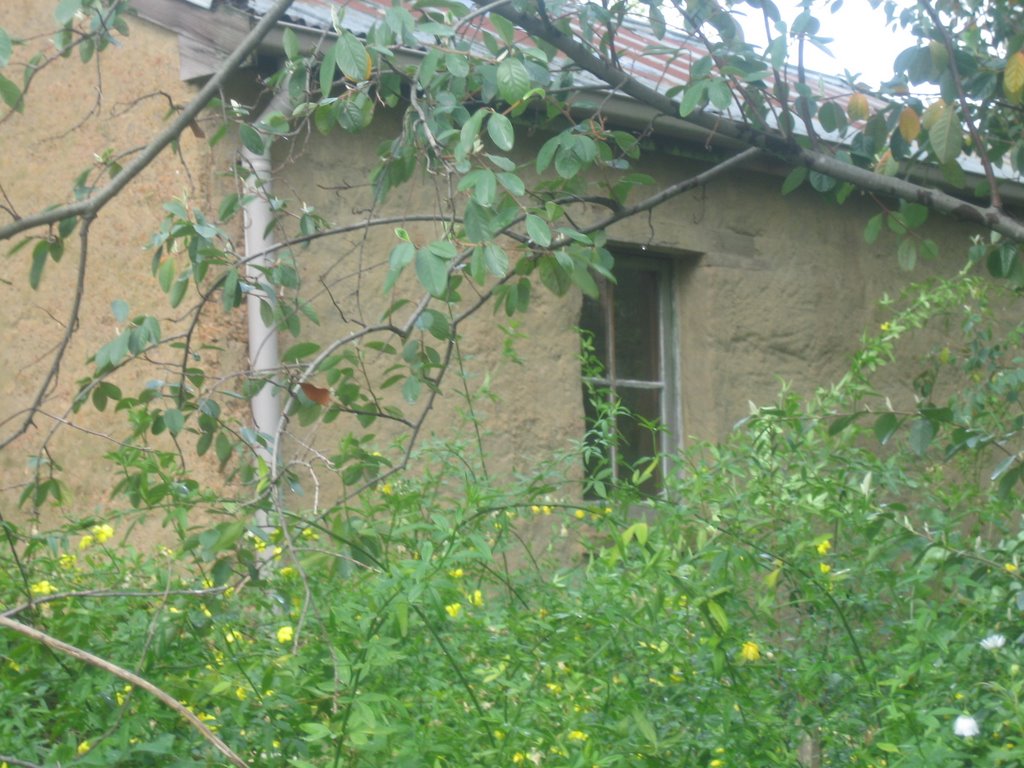
The above pictures of a neighbour’s mud brick house, a common site where I live here in Eltham, Melbourne, home to mud brick building in Australia. ‘Muddies” as that are called became popular in the mid fifties when Eltham was a remote small community and their champion was Alistair Knox.

"It is axiomatic that mud bricks will be a fundamental element in the alternative social structure today,'' he wrote.

"The material itself is free. It costs a man his physical labour only, which is the same for both rich and poor. "The making can be a wholly natural activity. It has great therapeutic properties. Watching the earth dry and the varying characteristics of its physical structure, immerse us in poetic deliberations that unite our hearts, heads and hands.

Click here to read his story.

Using mud bricks as building materials is relatively straightforward; homes are generally cooler in summer and warmer in winter. Apart from ensuring they have slightly longer eaves, mud brick homes don’t require any special maintenance and will outlast those constructed of more conventional materials.

To day there are small pockets of homes in the older areas where most of the homes are made from mud bricks. If you’re interested in modern designs click here for pictures.

Wednesday, November 11

Where do morals come from?


Introduction
Possibly Frederick Nietzsche’s most important work was in his “Genealogy of Morals”; where he posited morality stems from the   ascendancy of one will to dominate others. Nietzsche contended this so called “will to power” was analogous to nature’s quest for territory.  His philosophy was life affirmation (as in the will) does gives us the freedom to opt to live our life to the fullest, regardless of suffering or even possibly because of it. His concern was we were descending into  nihilism, as a consequence of a slavish type mentality of weakness, spurred on by religious overtones.
Some would argue his prediction was soon realised not long after his death with the outbreak of hostilities in World War 1.

But casting aside Nietzsche’s philosophy for the time being the question arises from whence do morals came from. Are they connected nature ?  Does evolution in nature exhibit some form of morality ?  What role is there for religious thinking? Are morals innate?Is it virtually impossible to trace their origins?   

Before attempting to answer these questions one needs to acknowledge morals are subjective in nature. What might seem unequivocally immoral to one society, say for instance the death penalty, may in turn be perfectly acceptable to another. For instance the death penalty for desecration or even entry of sacred sites by early tribespeople’s might seem barbaric to us but perfectly moral in the context of that culture then. Nor do I think it is wise to say morals are transcendal. Not that I am against spiritual enlightenment but practicality and merit has always been necessary if we are avoid the pitfalls of adopting abstract values.
Hence the question of a definition of morals is a difficult one but I have opted for one that involves a work in process concerned with evolving principles to signify what is considered right or wrong for various cultures.  
It appears reasonable to me one can answer in the affirmative to the earlier questions – but only to a degree, because the ingredients to morals values are many, not to mention such things as new discoveries, experiences and knowledge. This leads me to confine this paper to some of the more obvious ingredients -with a particular emphasis to the role of social cohesion.
It’s hardly surprising then that most moral philosophers up until fairly recently steer clear of any discussions as to where morals come from. Hence the view expressed in a paper from Stanford University “if a moral philosopher asks “whence morality,” she is more likely to be concerned with the justification of moral principles or the source and nature of obligation.
However the author does make a strong case to answer such questions from the viewpoint of an interdisciplinary inquiry. Still, there are important potential connections between the scientific explanatory issues and philosophical ones, opening the way for profitable interdisciplinary inquiry”.  FitzPatrick, William, "Morality and Evolutionary Biology", The Stanford Encyclopedia of Philosophy (Fall 2014 Edition), Edward N. Zalta (ed.), URL = http://plato.stanford.edu/archives/fall2014/entries/morality-biology/>.
Another paper I intend referencing concerns biological altruism -Okasha, Samir, "Biological Altruism", The Stanford Encyclopedia of Philosophy (Fall 2013 Edition), Edward N. Zalta (ed.), URL = .

Aim of this paper
Hence my aim is to shed some light on these key ingredients that contributed to our morals.What I also hope to achieve along the way is  to determine the consequences for their continuation or otherwise into the future.  
In the beginning
There is no reason for me to dwell on the miraculous events over billions of years for the first evolved multi cell creatures to emerge, except to say these insights into our past are only made possible by the evolution of our self-consciousness.

It is only thought to be only in the more modern era in evolutionary terms – that is within the past few hundred thousand years, we have some evidence of the ingredients which united humanity in the various groups under the principles of societal cohesion. As these ingredients to societal attitudes took hold we see evidence of their influence in the various cultures and how they became enshrined in their tribal laws.     
Instinctive type feelings things are either right or wrong and the possibility of biological altruism.  

Rather obviously behaviours evolved earlier on as instinctive type reactions as evident in the animal kingdom, primarily driven by a will to preserve the species. Over time our adaption meant a connection of such feelings to be associated with emotional values.  Psychological traits evident in loyalty to the immediate family became associated with positivism thereafter leading to hierarchical positions of tribal authority, deference to elders and so forth. But that is not suggest we have little control over these so called repertories to feel what is right and wrong, that arise more or less instinctively. Such feelings are not hostage to our future actions which can be subject to change from the jolt of psychological or environmental factors of one kind or another.   

Sober takes this argument a step further to argue there is no particular reason to think that evolution would have made humans into egoists rather than psychological altruists (see also Schulz 2011). On the contrary, it is quite possible that natural selection would have favoured humans who genuinely do care about helping others, i.e., who are capable of ‘real’ or psychological altruism. Therefore, evolution may well lead ‘real’ or psychological altruism to evolve. Contrary to what is often thought, an evolutionary approach to human behaviour does not imply that humans are likely to be motivated by self-interest alone.
The Stanford article on morality and Evolutionary Biology contends “very little in the study of human life has been left untouched by developments in evolutionary biologyand inquiry into the nature of morality is no exception.” 

The authors list is extensive, from appetites for food or sex, fear responses, patterns of aggression, parental care and bonding, of patterns of cooperation and retribution, to posit patterns of behaviours are often best explained as biological adaptations, i.e., traits that evolved through natural selection due to their adaptive effect. 
As various instinctive type reactions underpinned enhanced survival, psychological traits became aligned to this social cohesion principle and which was reinforced by evolving beliefs. Hence what emerges to sustain tribal cohesion and existential order is the requirement to adopt principals of fairness to ensure optimum survival outcomes.    

An example of how the ingredients for social cohesion enhanced existence and fairness in an evolving culture.  
The Australian aboriginal, as the longest known uninterrupted culture on the globe offers some clues and valuable insights of how social cohesion, reinforced by evolving beliefs may have influenced materially their society.

From what has been uncovered it is clear their existence was supported and reinforced by ideas closely aligned with nature, underpinned by the ideas on the dreamtime, a period considered outside of time when creation was thought to have occurred. In this respect reverence is demonstrated to be shown in practices that point to a type of communal existence co-dependent with nature together on what was regarded as sacred land.   
The underpinnings for these came from the dreamtime which posited a first Creator  appeared in the physical world to bring forth natural children and plants under the control of a mother earth, from thence came animals but lastly humankind.
Dreamtime stories were instrumental in defining their tribal values and which led to an elaborate system of rules under the common law, such as initiation into adulthood. This law covered ritualistic ceremonies such as the processes for corroborees when the tribes met to resolve matters such as arranged marriages, to plan for trade between the nations, to celebrate and so forth.
However one should not imagine there existed some form of utopian existence, as some evidence exists for severe skirmishes between tribes and a high level of violence as scores were settled brutally by means of “payback”. Penalties were quite severe and death prescribed for unauthorised entry into sacred sites.
But what was remarkable was their existence for such a long period without denuding the landscape, although changes due to the operation of fire stick farming may have led to the extinction of some species. 
Physical evidence of evolved changes in the brain supportive of enhanced moral reasoning.   
We also have physical evidence of the changes to structure of modern day brains and that of the more highly developed animals. There is clear evidence of the older repositories housing the more emotive instinctive responses, which combine in the extensive circuitry to the more newly evolved frontal lobes regions. Hence our brains bear evidence of the evolutionary journey with older instinctive regions designed to signal the emotive survival issues such as danger and the newly formed areas enabling more complexity types of  abstract thinking. 
There is no reason to feel one region, due to its more recent development, is superior to the other, since each is co dependant on the other. What I think we can say about the development of the frontal lobes is they played a key role in terms of awareness. From an evolutionary perspective it appears this development occurred relatively late in the evolutionary journey, in what would be regarded as modern, in the long journey of humanity.
Spirituality is also an ingredient, as I have attempted to illustrate in the previous section and in most cultures and has gravitated around the idea fairness.  In many other respects, it facilitates judgments, unclouded by what might be purely emotional reactions. 
A possible return to the moral value of fairness.
What is clear is our earliest codes of accepted behaviours was to put sharing ahead of individualism, so that loyalty to the group underwrote enhanced chances of survival. The success of the human species adapting to the enhanced dynamics of the group has been extraordinary but many would argue to excess. One could argue we are have become consumers and not sharers in nature’s bounty.   

Possibly the early roots for this twist in the evolutionary road from sharers to consumers may be linked to the idea we have dominion or superiority over nature, which is to be tamed and brought under human control. Such a view, combined with our extraordinary inventive improvements and adaptions in modernity has prospered humanity, but often this is at the expense of all of the other species. This in turn has the capacity to change our ideas on what are our underlying values ; to engender the need for a revision in our thinking to return to the way we viewed the lands when once we were more reliant to respond to the changing seasons for our survival.  This is even more relevant today, yet it can be can be hidden in the unrestrained growth of populations represented in urban sprawl and in modernity so that it not as readily discernible.
Conclusion
I think there are grounds to believe there are many ingredients in a universal type of morality entwined in nature, brutal as it may be seem, although of course this cannot be proven and is by no means is easily discernible. What I think this paper does illustrate is the important ingredient of social cohesion which played a key role in in our own early evolutionary journey. But I also think we can take note of Nietzsche’s dissertation on morals in the hope that a more dominant will is to emerge that recognizes the need to be far more attuned to that of nature, from whence we evolved.  In other words the need to show reverence to all of life, upon which we depend, and that which was once clearly recognised in many respects as a moral necessity by our ancient ancestors.