Thursday, December 3

Birds of Tokyo - Lanterns (Official video)


This is another song we are learning with the newly formed Open Door (Not for Profit ) Singers Diamond Valley choir.

Lately I've found
When I start to think aloud
There's a longing in the sound
There is more I could be
In darkness I leave
For a place I've never seen
It's been calling out to me
That is where I should be

We never carried days on our own
But now it's up to us to know
The weight of being so much more
We will find ourselves on the road

On we march
With a midnight song
We will light our way
With our lanterns on
On we march
Till we meet the dawn
We will light our way
With our lanterns on

As we walk out
Without question without doubt
In the light that we have found
It is finally clear
Our day has come
And we'll stand for who we are
We are ready we are young
We have nothing to fear

We never carried days on our own
But now it's up to us to know
The weight of being so much more
We will find ourselves on the road

On we march
With a midnight song
We will light our way
With our lanterns on
On we march
Till we meet the dawn
We will light our way
With our lanterns on

We held the light
To our faces
And realised
We were chasing
Shadows behind
Not worth saving
So burn it bright
Forever illuminating

On we march
With a midnight song
We will light our way
With our lanterns on
On we march
Till we meet the dawn
We will light our way
With our lanterns on
In darkness I leave
For a place I've never seen
It's been calling out to me
That is where I should be

Songwriters: IAN PATRICK BERNEY, IAN LEWIS KENNY, ADAM PETER WESTON, GLENN MICHAEL SARANGAPANY, ADAM JOHN SPARK
© BMG RIGHTS MANAGEMENT US, LLC
For non-commercial use only.
Data From: LyricFind


Tuesday, November 17

Muddies


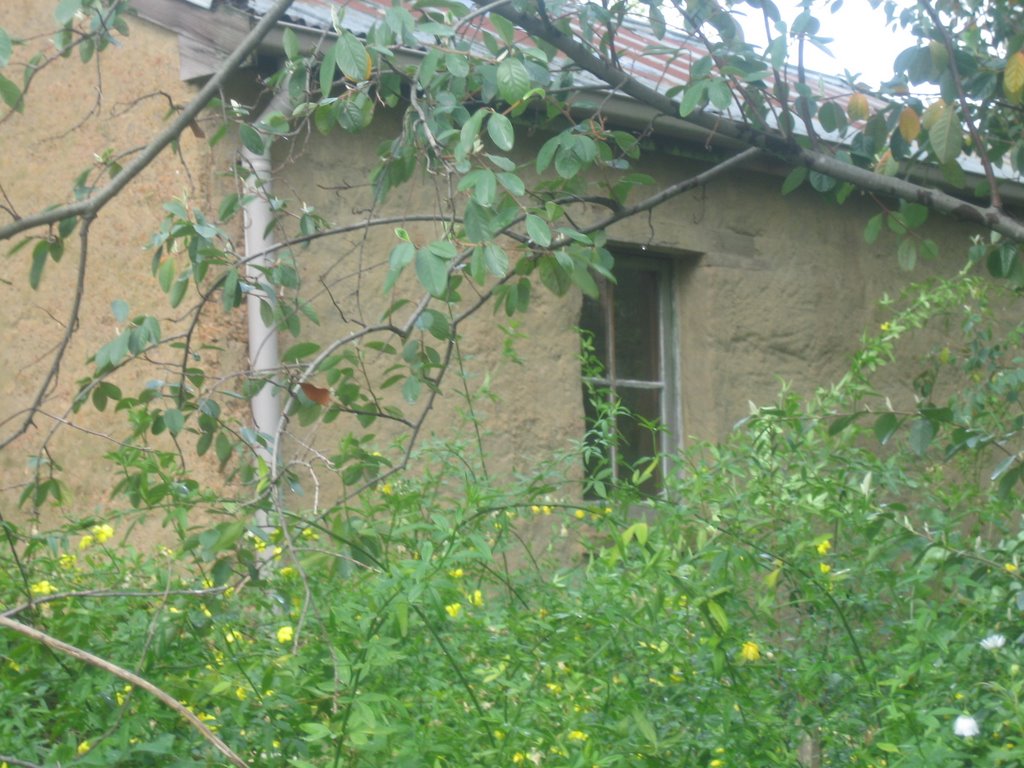
The above pictures of a neighbour’s mud brick house, a common site where I live here in Eltham, Melbourne, home to mud brick building in Australia. ‘Muddies” as that are called became popular in the mid fifties when Eltham was a remote small community and their champion was Alistair Knox.

"It is axiomatic that mud bricks will be a fundamental element in the alternative social structure today,'' he wrote.

"The material itself is free. It costs a man his physical labour only, which is the same for both rich and poor. "The making can be a wholly natural activity. It has great therapeutic properties. Watching the earth dry and the varying characteristics of its physical structure, immerse us in poetic deliberations that unite our hearts, heads and hands.

Click here to read his story.

Using mud bricks as building materials is relatively straightforward; homes are generally cooler in summer and warmer in winter. Apart from ensuring they have slightly longer eaves, mud brick homes don’t require any special maintenance and will outlast those constructed of more conventional materials.

To day there are small pockets of homes in the older areas where most of the homes are made from mud bricks. If you’re interested in modern designs click here for pictures.

Wednesday, November 11

Where do morals come from?


Introduction
Possibly Frederick Nietzsche’s most important work was in his “Genealogy of Morals”; where he posited morality stems from the   ascendancy of one will to dominate others. Nietzsche contended this so called “will to power” was analogous to nature’s quest for territory.  His philosophy was life affirmation (as in the will) does gives us the freedom to opt to live our life to the fullest, regardless of suffering or even possibly because of it. His concern was we were descending into  nihilism, as a consequence of a slavish type mentality of weakness, spurred on by religious overtones.
Some would argue his prediction was soon realised not long after his death with the outbreak of hostilities in World War 1.

But casting aside Nietzsche’s philosophy for the time being the question arises from whence do morals came from. Are they connected nature ?  Does evolution in nature exhibit some form of morality ?  What role is there for religious thinking? Are morals innate?Is it virtually impossible to trace their origins?   

Before attempting to answer these questions one needs to acknowledge morals are subjective in nature. What might seem unequivocally immoral to one society, say for instance the death penalty, may in turn be perfectly acceptable to another. For instance the death penalty for desecration or even entry of sacred sites by early tribespeople’s might seem barbaric to us but perfectly moral in the context of that culture then. Nor do I think it is wise to say morals are transcendal. Not that I am against spiritual enlightenment but practicality and merit has always been necessary if we are avoid the pitfalls of adopting abstract values.
Hence the question of a definition of morals is a difficult one but I have opted for one that involves a work in process concerned with evolving principles to signify what is considered right or wrong for various cultures.  
It appears reasonable to me one can answer in the affirmative to the earlier questions – but only to a degree, because the ingredients to morals values are many, not to mention such things as new discoveries, experiences and knowledge. This leads me to confine this paper to some of the more obvious ingredients -with a particular emphasis to the role of social cohesion.
It’s hardly surprising then that most moral philosophers up until fairly recently steer clear of any discussions as to where morals come from. Hence the view expressed in a paper from Stanford University “if a moral philosopher asks “whence morality,” she is more likely to be concerned with the justification of moral principles or the source and nature of obligation.
However the author does make a strong case to answer such questions from the viewpoint of an interdisciplinary inquiry. Still, there are important potential connections between the scientific explanatory issues and philosophical ones, opening the way for profitable interdisciplinary inquiry”.  FitzPatrick, William, "Morality and Evolutionary Biology", The Stanford Encyclopedia of Philosophy (Fall 2014 Edition), Edward N. Zalta (ed.), URL = http://plato.stanford.edu/archives/fall2014/entries/morality-biology/>.
Another paper I intend referencing concerns biological altruism -Okasha, Samir, "Biological Altruism", The Stanford Encyclopedia of Philosophy (Fall 2013 Edition), Edward N. Zalta (ed.), URL = .

Aim of this paper
Hence my aim is to shed some light on these key ingredients that contributed to our morals.What I also hope to achieve along the way is  to determine the consequences for their continuation or otherwise into the future.  
In the beginning
There is no reason for me to dwell on the miraculous events over billions of years for the first evolved multi cell creatures to emerge, except to say these insights into our past are only made possible by the evolution of our self-consciousness.

It is only thought to be only in the more modern era in evolutionary terms – that is within the past few hundred thousand years, we have some evidence of the ingredients which united humanity in the various groups under the principles of societal cohesion. As these ingredients to societal attitudes took hold we see evidence of their influence in the various cultures and how they became enshrined in their tribal laws.     
Instinctive type feelings things are either right or wrong and the possibility of biological altruism.  

Rather obviously behaviours evolved earlier on as instinctive type reactions as evident in the animal kingdom, primarily driven by a will to preserve the species. Over time our adaption meant a connection of such feelings to be associated with emotional values.  Psychological traits evident in loyalty to the immediate family became associated with positivism thereafter leading to hierarchical positions of tribal authority, deference to elders and so forth. But that is not suggest we have little control over these so called repertories to feel what is right and wrong, that arise more or less instinctively. Such feelings are not hostage to our future actions which can be subject to change from the jolt of psychological or environmental factors of one kind or another.   

Sober takes this argument a step further to argue there is no particular reason to think that evolution would have made humans into egoists rather than psychological altruists (see also Schulz 2011). On the contrary, it is quite possible that natural selection would have favoured humans who genuinely do care about helping others, i.e., who are capable of ‘real’ or psychological altruism. Therefore, evolution may well lead ‘real’ or psychological altruism to evolve. Contrary to what is often thought, an evolutionary approach to human behaviour does not imply that humans are likely to be motivated by self-interest alone.
The Stanford article on morality and Evolutionary Biology contends “very little in the study of human life has been left untouched by developments in evolutionary biology, and inquiry into the nature of morality is no exception.” 

The authors list is extensive, from appetites for food or sex, fear responses, patterns of aggression, parental care and bonding, of patterns of cooperation and retribution, to posit patterns of behaviours are often best explained as biological adaptations, i.e., traits that evolved through natural selection due to their adaptive effect. 
As various instinctive type reactions underpinned enhanced survival, psychological traits became aligned to this social cohesion principle and which was reinforced by evolving beliefs. Hence what emerges to sustain tribal cohesion and existential order is the requirement to adopt principals of fairness to ensure optimum survival outcomes.    

An example of how the ingredients for social cohesion enhanced existence and fairness in an evolving culture.  
The Australian aboriginal, as the longest known uninterrupted culture on the globe offers some clues and valuable insights of how social cohesion, reinforced by evolving beliefs may have influenced materially their society.

From what has been uncovered it is clear their existence was supported and reinforced by ideas closely aligned with nature, underpinned by the ideas on the dreamtime, a period considered outside of time when creation was thought to have occurred. In this respect reverence is demonstrated to be shown in practices that point to a type of communal existence co-dependent with nature together on what was regarded as sacred land.   
The underpinnings for these came from the dreamtime which posited a first Creator  appeared in the physical world to bring forth natural children and plants under the control of a mother earth, from thence came animals but lastly humankind.
Dreamtime stories were instrumental in defining their tribal values and which led to an elaborate system of rules under the common law, such as initiation into adulthood. This law covered ritualistic ceremonies such as the processes for corroborees when the tribes met to resolve matters such as arranged marriages, to plan for trade between the nations, to celebrate and so forth.
However one should not imagine there existed some form of utopian existence, as some evidence exists for severe skirmishes between tribes and a high level of violence as scores were settled brutally by means of “payback”. Penalties were quite severe and death prescribed for unauthorised entry into sacred sites.
But what was remarkable was their existence for such a long period without denuding the landscape, although changes due to the operation of fire stick farming may have led to the extinction of some species. 
Physical evidence of evolved changes in the brain supportive of enhanced moral reasoning.   
We also have physical evidence of the changes to structure of modern day brains and that of the more highly developed animals. There is clear evidence of the older repositories housing the more emotive instinctive responses, which combine in the extensive circuitry to the more newly evolved frontal lobes regions. Hence our brains bear evidence of the evolutionary journey with older instinctive regions designed to signal the emotive survival issues such as danger and the newly formed areas enabling more complexity types of  abstract thinking. 
There is no reason to feel one region, due to its more recent development, is superior to the other, since each is co dependant on the other. What I think we can say about the development of the frontal lobes is they played a key role in terms of awareness. From an evolutionary perspective it appears this development occurred relatively late in the evolutionary journey, in what would be regarded as modern, in the long journey of humanity.
Spirituality is also an ingredient, as I have attempted to illustrate in the previous section and in most cultures and has gravitated around the idea fairness.  In many other respects, it facilitates judgments, unclouded by what might be purely emotional reactions. 
A possible return to the moral value of fairness.
What is clear is our earliest codes of accepted behaviours was to put sharing ahead of individualism, so that loyalty to the group underwrote enhanced chances of survival. The success of the human species adapting to the enhanced dynamics of the group has been extraordinary but many would argue to excess. One could argue we are have become consumers and not sharers in nature’s bounty.   

Possibly the early roots for this twist in the evolutionary road from sharers to consumers may be linked to the idea we have dominion or superiority over nature, which is to be tamed and brought under human control. Such a view, combined with our extraordinary inventive improvements and adaptions in modernity has prospered humanity, but often this is at the expense of all of the other species. This in turn has the capacity to change our ideas on what are our underlying values ; to engender the need for a revision in our thinking to return to the way we viewed the lands when once we were more reliant to respond to the changing seasons for our survival.  This is even more relevant today, yet it can be can be hidden in the unrestrained growth of populations represented in urban sprawl and in modernity so that it not as readily discernible.
Conclusion
I think there are grounds to believe there are many ingredients in a universal type of morality entwined in nature, brutal as it may be seem, although of course this cannot be proven and is by no means is easily discernible. What I think this paper does illustrate is the important ingredient of social cohesion which played a key role in in our own early evolutionary journey. But I also think we can take note of Nietzsche’s dissertation on morals in the hope that a more dominant will is to emerge that recognizes the need to be far more attuned to that of nature, from whence we evolved.  In other words the need to show reverence to all of life, upon which we depend, and that which was once clearly recognised in many respects as a moral necessity by our ancient ancestors.  

Saturday, October 24

Talk to OLHC -Eltham

In August I gave a talk to the school children, at the request of the school, about the Malawi Support Group and pointed out that Malawi, with a population of  16 million (Australia has about out 23 million people), occupies an area  less than the size of Tasmania. Hence the country has limited resources 
 
One of the biggest differences I explained is  how much better off we are in Australia compared to Malawians  – as nearly half the people in Malawi earn only $1 a day. After talking about life in Malawi and the limited facilities in their sister parishes' catholic school when then all watched the video as per below -to enjoy the  joyful celebration of the inaugural mass in the new church largely funded by the MSG. 
 
I also read them a story I had composed. 
The children were wonderfully attentive and asked many thoughtful questions to subsequently raise $234 from their own efforts by doing odd jobs over the holidays. A further $25 was donated by the tuckshop. 
 
Over the years small regular amounts raised like this have all added up to make a big difference so that in monetary terms so far we have sent over well over  $100,000. But more importantly a story has emerged, united by a common thread of unity to embrace fellowship in fundraising  activities and in co- sharing the gifts and stories to learn more about one's respective customs and cultures.   
 

Tuesday, October 6

Open Door Singers Diamond Valley Choir’s First Concert

Recently the Open Door Singers Diamond Valley choir held its inaugural performance to a packed and enthusiastic house. Entry was by way of a gold coin donation and the proceeds were donated to the charity CAVE, who support young people in their reading and writing skills. Here are a few videos my daughter recorded on her iPhone.


Highly instrumental in getting the best in joyous musical expression was the leadership provided by the accomplished singer and acclaimed choral conductor Shaun Islip whose enthusiasm is highly contagious.

Shaun is the Musical Director of the not for profit organisation "Open Door Singers" which aims to foster and grow community choirs and is ably supported by his highly competent and lovely wife. 

Friday, September 11

Celine Dion & Josh Groban Live "The Prayer" (HD 720p)


This is another song we are learning with the newly formed Open Door Singers Diamond Valley choir and I think both the lyrics and music are inspiring, just as is the story of Josh Groban.
He first performed with Dion as only a 17 year old nervous last minute ''stand in" as you will hear on the video.  The rest is history.

Thursday, September 3

Looking after those precious frontal lobes.

If you asked someone how well they are looking after their precious frontal brain lobes you’re likely to get a rather quizzical look and at best maybe a reference to stimulatory activity they undertake to keep the brain exercised. Yet from early childhood it is important we don’t take these fragile regions for granted, because they can easily break down once exposed to trauma or put under undue pressure.    

Our precious frontal lodes came to us very late in the evolutionary cycle and are thought to be the additional dimension that gave us the capacity for a richer more advanced state of consciousness. Of course consciousness itself is a rather slippery concept and no one is quite sure precisely how the brain’s integrated circuitry brings all of this to fruition in the frontal lobes region. However the crucial nature of this fragile brain area becomes evident since it is the focal point to our existence and where we formulate judgments and have the capacity to ponder abstract concepts or come up with rich creative ideas. The downside is any damage to the lobes or undue stress can trigger an inability to function rationally with the risk of ensuing tragic outcomes.    

Elkhonon Goldberg, PhD an author and Professor of Neurology pointed out in a study of a large number of unpremeditated homicides, that all of those involved, without a single exception, were found to have evidence of prior damage to the frontal lobes. The study demonstrated that although such a group in normal type situations were clearly able to distinguish right from wrong, once they became involved or subjected to any highly pressured event they revert to lower level instinctive modes of behaviours. This poses tragic consequences for themselves and their victims, in the absence of cognitive strategies as compensatory measures.
It also imposes intriguing questions about the very nature of good and evil and when one can become temporarily insane.    

But even in the absence of a prior recognisable trauma an unhealthy build-up in fear can also precipitate many negative outcomes.
Edward Hallowell -psychiatrist –in an Article from Harvard Business Review -re published in the Work Space area of the Financial Review summed up the position as follows:  

"
As a specialist in learning disabilities, I have found that most dangerous disability is not any formally diagnosable condition like dyslexia or ADD (attention deficit disorder). Its fear. When the frontal lobes approach capacity and we begin to fear that we can't keep up, 'the relationship between their higher and lower regions of the brain take an ominous turn. In survival mode, the deep areas of the brain assume control and began to direct the higher regions.
As a result the whole brain gets caught in a neurological Catch 22. The deep regions interpret the messages of overload they receive from the frontal lobes in the same way they interpret everything. They furiously fire signals of fear, anxiety, impatience, irritability anger or panic. In a futile attempt to do more than is possible, the brain paradoxically reduces its ability to think clearly."

In everyday life a temporary loss of control through fear can happen much easier than we can imagine. Examples abound of people, subject to intense pressure, “blowing up” so to speak, evident in their childish outbursts where they revert to highly simplistic communications.    

Road rage is a good example of where a pent up fear and rage can spill over to a driver behind the wheel of car reacting irrationally in a fit of rage.
Fortunately there are many simple things we can all do to ovoid overload, apart from combatting the more serious maladies beyond the scope of this paper. What I always found helpful is to plan ahead, leaving some generous time allotted for unexpected events. Simply put, to allow time for contingencies. But what is even more important is to avoid becoming "fearful" of failing to meet deadlines. When unforeseen obstacles arise it is always better to negotiate a postponement than to continue on and allow anxiety of fear to take its grip.  I also always found it extremely helpful to take time out for contemplation, and to remind oneself there is always plenty of time to do what is really important and not to accommodate unrealistic demands. My view is this propensity to make unreasonable demands and to fail to allow for contingencies remains the continuing scourges of modernity.

Hence, I think many of the problems that beset us in modernity is not so much the rapid deployment of technology or added complexity but the unrealistic demands we impose on one another. Rather we fail to allow time to take care of our minds, to ensure adequate rest, to ensure there are sensible time allowed for relaxation, for nutrition and to avoid excessive pressure, often exerted by others with no idea of how much work is involved.

I think what is at risk in the roll-out of the digital transformation is the necessary human interactions to ensure sufficient time to incorporate safeguards and reliability. Today the scope for change is accelerating, but the question is are we advancing at such a rate of knots that we will become compromised to the extent we risk becoming overwhelmed. The risk is our already overtaxed brains fail to cope with the avalanche of information and the unrelenting demands made on us.

Another aspect that is overlooked as we move to a more robotic based existence is the reduction in the face to face communication and the consequences of this for our overall state of wellbeing. When you are talking to someone in a relaxed manner, your brain begins to buzz, releasing pleasurable feelings similar to endorphins when you exercise. Counsellors understand this principle as the very first objective is always to attempt to get a person to calm down since there is no point in attempting to reason rationally with someone who is in an extreme emotional state. This of course is not always possible or practical in attempting to deal with someone in a drug induced state or who is severely traumatised or enraged. But it helps us better understand when to intervene and the best course of action to take in our responses.     
I have always noticed, when making presentations the considerable advantages in talking to people in an interactive mode, how you always feel better than addressing large groups of people when you are in "remote" mode. When giving presentations I had wondered why that was the case, but I now understand it was more a matter the interactive format ensured the responsive bond meant we were all receiving reciprocal pleasurable stimuli, that made us feel appreciative afterwards.
But nowhere is this more important than in early learning. Youthful minds need plenty of sleep and nutrition and to feel good about themselves before they are able to concentrate and advance in early learning. The problems in the classroom of disruptive and unruly children can usually be traced back to them feeling unsafe or angry. It’s probably more important to help teach young students how to deal with their anger than it is to read and write and some schools are beginning to understand this with miraculous results. What was reported in relation to one school was the idea of showing students simple pictures of happy and sad or angry people and asking them which one applied to them. 

The end result after teachers were able to spend some time discussing different problems was an immense improvement in outcomes. By way of example incidents in the playground of 30 -4o altercations per month subsequently reduced to zero.

There is no doubt humans have the marvellous capacity to be innovative and make new discoveries including a rethink of where we go from here, but time will tell.

Monday, August 31

Shosholoza


Shosholoza is a song the soon to be formed Open Door Singers Diamond Valley choir is currently learning. It has its origins as an Ndebele folk song from Zimbabwe and has become so popular in South African culture that it has been adopted as South Africa's second national anthem.
The lyrics came from the heartache of working in the mines for encouragement as a sign of solidarity. The hidden meaning was to support the struggle against oppression and possibly represents a cry for the beloved country in the hills far away.  
The are many different lyrics but here is a sample with an approximate translation:
         Go forward

Go forward

from those mountains

on this train from South Africa

Go forward

Go forward

You are running away

You are running away

From those mountains

On this train from South Africa

Sunday, August 16

What is it you believe but can’t prove ?

From an early age I developed the idea of the importance of good works and that simply believing in the “Christ” was insufficient if one was to attempt to encapsulate the spirit of what was meant in the age old message. I have since realized that such an assertion may also be somewhat simplistic, since stories have symbolic lessons which are not always clear to us today. However it still remains true to my belief to day.   
Here are a few responses from different people. Which one resonates with you?
Jared Diamond –Evolutionary biologist and professor of geography at UCLA, author and Pulitzer Prize winner with extensive field experience in North America, South America, Africa, Asia , Australia and New Guinea.
When did humans complete their expansion around the world? I ‘m convinced , but can’t yet prove, that humans first reached the continents of North America, South Americas, and Australia only very recently-during or near the end of the last Ice Age. Specifically I’m convinced they reached North America around 14,000 years ago, South America around 13,500 years ago and Australia and New Guinea around 46,000 years ago. And that within a few centuries of those dates humans were responsible for the extinction of most of the big animals of those continents.

Anton Zeilinger. Professor of physics at the University of Vienna.
Once you adopt the notion that reality and information are rather the same, all quantum paradoxes and puzzles like Schrödinger’s cat disappear. Note the price of reconciliation is high. If my hypothesis is true, many questions become meaningless. There is no sense asking what is going on out there. Schrödinger’s cat is neither dead nor alive unless we obtain information about its state. By the way, I also believe that the day will come when we learn to overcome “de coherence” and to observe quantum phenomenon outside the shielded environment of Labourites. I hope that (unlike the unexamined cat) I will be alive when this happens.

Carolyn Porco-Planetary scientist.
We may soon discover life-forms under the ice on some moon orbiting Jupiter or Saturn or decide the intelligible signals of an advanced, unreachable distant alien civilisation.

J Craig Ventor –Visionary Genomic Researcher.
Our human centric view of life is clearly unwarranted. From the millions of genes we are continually discovering in all our organisms, we learn that a finite number of genes appear over and over again and could easily have evolved from a few microbes arriving in a meteor or in intergalactic dust.

Leon lederman -Nobel Prize Winer in Physics 1988.
To believe something while knowing that it cannot be proved (yet) is the essence of physics. Guys like Einstein, Dirac, Poncare, extolled the beauty of concepts, in a bizarre sense placing truth at a lower level of importance.

Maria Spiropula -Experimental physicist.
I believe nothing to be true if it cannot be proved.
My hunch (and my wish) is that in the laboratory we will be able to segment space-time so finely that gravity will be studied and understood in a confined environment –and that gravitational particle physics will become recognised field.

David G Myers-Professor of psychology at Hope College, in Michigan
The mix of faith based humility and scepticism helped fuel the beginning of modern science and it has informed my own research and writing. The whole truth cannot be found merely by searching our minds, for there is not enough there. So we must put our ideas to the test. If they survive, so much the better for them; if not. So much the worse.

Jonathan Haidt Associate professor in the department of psychology at the University of Virginia.
If psychologists took religious experience seriously and tried to understand it from the inside, as anthropologists did in studying other cultures, I believe it would enrich our science. I have found religious texts and testimonials about purity and pollution essential for understanding the emotion of disgust and for helping me to see the breadth of moral concerns beyond harm, rights and justice.

David Buss Professor in the Psychology Department of the University Of Texas at Austin.
I believe in true love. The road of ordinary love are well travelled and their markers are well understood- the mesmerizing attraction, the ideational obsession, the sexual afterglow, the often profound self-sacrifice, the desire to combine DNA. But true love takes its own course, through unchartered territory. It knows no fences, has no barriers or boundaries. It’d difficult to define. Eludes modern measurement, seems scientifically woolly. But I know true love exists. I just can’t prove it.

Quotes taken from John Brockman’s book entitled “What We Believe but Cannot Prove”.


Saturday, August 8

The Lion King 2 - He Lives In You


We are learning this song "He Lives in You" from the "Lion King" from a varied musical repertoire of the newly formed project to establish a local community choir. 

Hence the "Open  Door Singers Diamond Valley" is in the early formative stages but nevertheless the format and music in the first month has been enthusiastically adopted by locals. This is in no small part due to the expert direction of the accomplished singer and acclaimed choral conductor Shaun Islip. 

Shaun is the Musical Director of the not for profit organisation "Open  Door  Singers" which aims to foster and grow community choirs. It seems very likely the "Open  Door Singers Diamond Valley" will become a future reality as members elect to join.
 
The words to the song are as follows :
 
Ingonyama nengw' enamabala
Night and the spirit of life calling
Oh, oh, iyo, mamela
And the voice with the fear of a child answers
Iyo iyo, mamela
Wait, there's no mountain too great
Hear these words and have faith
Oh, oh, iyo
Have faith
Hela hey mamela, hela hey mamela
He lives in you, he lives in me
He watches over everything we see
Into the waters, into the truth
In your reflection, he lives in you
Dream, and the voice in the wind whispers
Iyo mamela
Wait, there's no mountain too great
Hear these words and have faith, oh, oh, iyo
He lives in you, he lives in me
He watches over everything we see
Into the waters, into the truth
In your reflection, he lives in you
Ingonyama nengw' enamabale
He lives in you, he lives in me
He watches over everything we see
Into the water, into the truth
In your reflection, he lives in you
He lives in you, oh yeah, he lives in me
He watches over everything we see
Into the water, into the truth
In your reflection, he lives, he lives, he lives, he lives in you
He lives, he lives, he lives in you
He watches over everything we see
Songwriters
Jay Rifkin;Mark Mancina;Lebo Morake
Published by
WONDERLAND MUSIC COMPANY, INC.;WALT DISNEY MUSIC COMPANY